


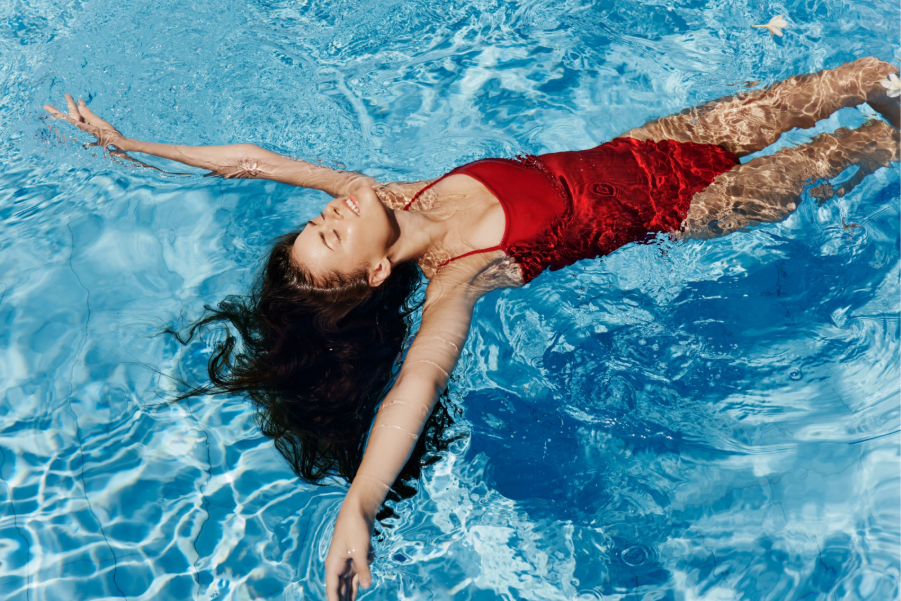
Swimming is great for your body, but your hair and skin don't always feel quite as enthusiastic about all that time in the water.
If you've ever left the pool with dry hair after swimming, skin that feels tight, a lingering pool smell or hair that's suddenly harder to brush, there's a reason.
Swimming exposes your hair and skin to more than water alone. Chlorine, dissolved minerals and other components of pool water — or salt and minerals when swimming in the ocean — can influence how your skin and hair look and feel.
The good news? You don't need to give up the pool.
A good swim-care routine simply considers what your hair and skin experience around the water. Think of it in three stages:
PROTECT — before you swim
CLEANSE-RECOVER — when you wash
COMFORT — after swimming
Understanding why each stage matters can help you care for your hair and skin without making your swim routine complicated.
What Does Chlorine Do to Your Hair and Skin?
Chlorine-based disinfectants play an important role in maintaining swimming pool hygiene.
However, repeated exposure to chlorinated water can also affect the way the skin and hair feel.
Your skin naturally contains surface lipids that contribute to its protective barrier and help retain moisture. After swimming, some people notice that their skin feels drier or tighter than usual.
Hair can also feel noticeably different after repeated pool exposure. The outer surface of each hair fibre, known as the cuticle, contributes to smoothness and manageability. Following swimming, hair may feel drier, rougher, more tangled or less manageable.
These effects can become particularly noticeable for frequent swimmers, making what you do before and after swimming an important part of your regular hair and skin care routine.

Why Is My Skin Dry After Swimming?
Dry skin after swimming isn't necessarily caused by one factor alone.
Time spent in water, exposure to pool disinfectants, repeated showering and even your choice of cleanser can influence how your skin feels afterwards.
Outdoor swimmers may also experience additional environmental exposure from sun, wind and heat.
The answer isn't aggressive scrubbing or harsh cleansing. Instead, post-swim skin care should focus on gently cleansing away swim-water residues before replenishing moisture.
This is particularly worth considering if you swim frequently or already tend towards dry-feeling skin.
What Should You Do for Your Skin After Swimming?
A good after-swim skin care routine can be surprisingly simple.
Rinse
Rinse your skin with fresh water soon after leaving the pool or ocean.
Cleanse
Use a gentle but effective cleanser or body wash for swimmers to help wash away chlorine, minerals, salt and other swim-water residues.
The goal is effective cleansing without leaving the skin feeling unnecessarily stripped.
Moisturise & Condition
Follow cleansing with a moisturising lotion and conditioner to replenish moisture and leave the skin and hair feeling soft and comfortable.
For areas that tend to become particularly dry after swimming, a richer moisturising product may be useful.
The important idea is balance: skin needs effective cleansing after swimming, but it also needs moisture and comfort afterwards.

Why Is My Hair Dry After Swimming?
If your hair feels rough, tangled or straw-like after the pool, you're certainly not the only swimmer searching for an answer.
Repeated exposure to pool water, combined with washing, brushing, sun exposure and styling, can influence the condition and feel of the hair.
This is why dry hair after swimming can be particularly noticeable among frequent swimmers and people with long, coloured, lightened or chemically treated hair.
A good after-swim hair care routine should therefore do more than simply cover up the smell of the pool.
The aim is to effectively cleanse after swimming and then give the hair the conditioning and nourishment it needs to feel soft and manageable again.
Why Does Hair Turn Green After Swimming? Chlorine vs Copper
Chlorine isn't the only part of the swimming-pool story.
Pool water can also contain dissolved minerals and metals, including copper.
Copper can interact with the hair fibre and contribute to the greenish tint sometimes associated with "swimmer's hair", particularly in blonde, lightened or lighter-coloured hair.
So while it's common to hear that chlorine turns blonde hair green, copper is an important part of the story.
This is also why a swim-specific cleanser may consider more than chlorine alone. For frequent swimmers, cleansing away chlorine and mineral residues can form part of a more complete post-swim hair care routine.
Does Chlorine Stay in Your Hair After Swimming?
This is one reason rinsing after swimming matters.
Pool-water residues can remain associated with the hair and skin after you leave the water. A thorough fresh-water rinse helps physically wash away pool water, while cleansing provides an additional step in your post-swim routine.
For frequent swimmers, this is where products described as a chlorine removal shampoo, swimmers shampoo or after-swim shampoo can be useful.
Rather than simply choosing a shampoo because it cleans hair, regular swimmers may want a product specifically designed with the swimming environment in mind.

Do You Need a Chlorine Removal Shampoo After Swimming?
You don't necessarily need a specialised shampoo after every occasional dip in the pool.
But if you swim regularly, choosing a shampoo for swimmers can make sense.
A swim-specific cleanser may be designed to help cleanse away chlorine and mineral residues while also considering the dryness, roughness and tangling that swimmers commonly experience.
When choosing an after-swim shampoo, look beyond the idea of "deep cleansing".
Frequent swimmers need effective cleansing, but hair may also benefit from ingredients and follow-up care that support softness, moisture and manageability.
The goal isn't simply to strip everything from your hair.
It's to cleanse effectively and then replenish.
How to Remove Chlorine From Hair After Swimming
If you're wondering how to get chlorine out of hair after swimming, keep your routine simple.
1. Rinse promptly
Rinse your hair thoroughly with fresh water as soon as practical after leaving the pool.
2. Cleanse
Follow with an appropriate shampoo. Frequent swimmers may prefer a purpose-designed chlorine removal shampoo or swimmers shampoo.
3. Think beyond chlorine
Chlorine isn't the only consideration in pool water. A swim-specific cleansing formula may also be designed with mineral residues such as copper in mind.
4. Replenish moisture
Follow cleansing with conditioning or nourishing hair care if your hair tends to feel dry, rough or tangled after swimming.
Together, these steps create a more complete post-swim hair care routine than cleansing alone.
How to Protect Hair From Chlorine Before Swimming
Good swim hair care actually starts before you enter the water.
One of the simplest habits is to thoroughly wet your hair with fresh water before swimming. You may also choose an appropriate pre-swim hair product designed to coat or condition the hair before pool exposure.
A swimming cap can provide another physical layer between your hair and the pool, particularly if you swim frequently.
After swimming, rinse and cleanse before following with nourishing hair care as needed.
Thinking about both before and after swim hair care creates a more complete routine than waiting until hair already feels dry or tangled.
What About Swimming in the Ocean?
Pool and ocean swimming expose your hair and skin to different environments.
Seawater contains high concentrations of salts and naturally occurring minerals, while outdoor swimming can also mean greater exposure to sun, wind and heat.
As seawater dries, hair may feel coarse or stiff and skin can feel dry or tight.
That's why the same basic principle can be useful after both pool and ocean swimming: rinse, cleanse and replenish.
If you regularly alternate between the pool and ocean, consider swim-care products designed with both chlorinated and salt-water environments in mind.
The Complete Swim-Care Routine: Protect, Cleanse-Recover, Comfort
Looking after your hair and skin around swimming doesn't need to involve an elaborate routine.
Instead, think about what they need at each stage of the swim.
BEFORE — PROTECT
Prepare your hair and skin before entering the water.
Wet your hair with fresh water and use appropriate pre-swim hair or skin care where desired. When swimming outdoors, remember appropriate sun protection.
WASH — CLEANSE-RECOVER
After swimming, rinse thoroughly with fresh water.
Use gentle but effective cleansing products to help wash away chlorine, minerals, salt and other swim-water residues.
For frequent swimmers, this may include a chlorine removal shampoo or body wash designed for swimmers.
AFTER — COMFORT
Once your hair and skin are clean, focus on moisture, softness and comfort.
Follow with moisturising skin care and nourishing hair care to leave skin feeling comfortable and hair feeling softer and more manageable.
Protect. Cleanse-Recover. Comfort.
It's a simple way to think about swim care whether you're a daily lap swimmer, weekend beachgoer or someone who seems to spend half the summer in the pool.

What Should You Look for in Swim-Care Products?
Not every swimmer needs an elaborate collection of products.
But if you swim regularly, it can be useful to choose products designed around the specific needs of swimmers.
Depending on your hair, skin and swimming habits, your routine might include:
- pre-swim hair or skin care
- a shampoo for swimmers
- an after-swim or chlorine removal body wash
- nourishing hair care
- moisturising after-swim skin care
The key is to think about the routine as a whole.
Effective swim care isn't only about removing chlorine. It's about preparing before the water, cleansing effectively afterwards, and replenishing the moisture and softness your hair and skin may need.
Swim Often? Consistency Matters More Than Complexity
You don't need ten products or a complicated routine to look after your hair and skin around swimming.
Small habits matter.
Wet your hair before you swim. Rinse soon after getting out. Cleanse appropriately. Moisturise your skin. Give dry or tangled hair some extra nourishment.
If you're swimming several times each week, products specifically formulated with swimmers and post-swim care in mind can become a useful part of that routine.
Swimming is one of life's simple pleasures — whether it's morning laps, an ocean swim on holiday or a long afternoon by the pool.
A thoughtful swim-care routine isn't about worrying about the water. It's simply about understanding what your hair and skin experience and giving them the right care before and afterwards, so looking after them becomes as natural as packing your towel.
Frequently Asked Questions
What does chlorine do to your hair?
Repeated exposure to chlorinated pool water can contribute to hair feeling dry, rough or tangled. Other components of pool water, including minerals such as copper, can also interact with hair, which is why a complete swim-care routine considers more than chlorine alone.
Why does my hair feel like straw after swimming?
Hair can feel rough or straw-like after swimming due to a combination of pool-water exposure, repeated washing and moisture loss. This may be more noticeable in frequent swimmers or hair that is already dry, coloured, lightened or chemically treated. Effective cleansing followed by conditioning and nourishing hair care can help maintain softness and manageability.
How to fix dry hair after swimming?
Start by rinsing thoroughly with fresh water and cleansing with an appropriate after-swim shampoo or shampoo for swimmers. Follow with conditioning or nourishing hair care to help restore softness and improve manageability. If you swim regularly, adding appropriate pre-swim hair care can also support a more complete routine.
Is chlorine hair damage permanent?
Hair that feels dry or rough after chlorine exposure isn't necessarily permanently damaged. How hair responds depends on factors such as swimming frequency, existing hair condition, colour or chemical treatments and your usual hair-care routine. Regular rinsing, appropriate cleansing and conditioning can help keep frequently exposed hair feeling softer and more manageable.
What is a chlorine removal shampoo?
A chlorine removal shampoo is designed for cleansing hair after exposure to chlorinated pool water. Depending on the formulation, a swim-specific shampoo may also be designed to cleanse mineral residues associated with swimming.
Why does blonde hair turn green after swimming?
The greenish tint associated with swimmer's hair is commonly linked to copper interacting with the hair, rather than chlorine simply colouring the hair green. Blonde, lightened and other lighter hair colours can make the colour change particularly noticeable.
How can I look after dry skin after swimming?
Rinse with fresh water after leaving the pool, cleanse gently and follow with moisturising skin care. If you swim frequently, a dedicated after-swim skin care routine can help support soft, comfortable and hydrated-feeling skin.
Should I wash my hair every time I swim?
How often you shampoo depends on factors such as how frequently you swim, your hair type and the products you use. Rinsing your hair thoroughly with fresh water after swimming is a useful first step. Frequent swimmers may also choose a purpose-designed after-swim shampoo or swimmers shampoo, following the product directions and their individual hair-care needs.


